
 ES
ES  EN
EN  FR
FR  PT
PT  DE
DE  IT
IT 

What should travelers know before visiting Mexico for the World Cup?
First of all, welcome to our Traveling to Mexico During the FIFA World Cup 2026 Ultimate Fan Guide! The 2026 World Cup is going to be a massive event, and Mexico is the country with the most football history in North America. This is the first time a nation hosts the tournament for a third time. If you are traveling to Mexico, the most important thing to know is that while there are three host cities—Mexico City, Guadalajara, and Monterrey—the capital will be the main center of the party. The Estadio Banorte (before Estadio Azteca) is where the opening match will happen, and the atmosphere there is like nowhere else in the world.
Expect big crowds. Mexico City is already one of the largest cities on earth, and during the World Cup, it will be even busier. You should book everything months in advance. Regarding entry requirements, most visitors from the US, Canada, UK, and the EU do not need a visa for a tourist stay of up to 180 days. However, always check your local Mexican embassy website before you fly. You will need a valid passport and to fill out a digital customs form.
The weather in June and July is the “rainy season” in central Mexico. It doesn’t rain all day, but you should expect heavy showers in the late afternoon. It’s usually warm and sunny in the morning, so dress in layers. Also, Mexico City is at a high altitude (2,240 meters). This means the air is thinner. You might feel a bit out of breath or get a headache during your first 24 hours. Drink lots of water, avoid heavy meals on day one, and give your body time to adjust before heading to the stadium.
Is Mexico City safe for World Cup visitors?
Safety is a common concern for people traveling to Mexico for the first time. The truth is that Mexico City is generally safe for tourists, especially in the areas where fans will be staying and celebrating. During the World Cup, the city will have a massive security presence. There will be extra police in the Metro, near the stadiums, and in the “Fan Zones” to make sure everyone feels comfortable.
However, you still need to use common sense. Most crime against tourists is “petty theft,” like pickpocketing. This usually happens in very crowded places like the Zócalo (the main square), busy Metro stations, or outside the Estadio Azteca. Keep your phone in your front pocket and don’t wear expensive jewelry or watches while walking in the street. If you have a backpack, wear it on your front when you are in a crowded train or bus.
Stick to the popular neighborhoods. Areas like Roma, Condesa, Coyoacán, and Polanco are very friendly and safe to walk around, even at night. If you are going out for drinks, always keep an eye on your glass and don’t accept drinks from strangers. When it comes to transportation, never hail a taxi on the street. Use apps like Uber o Didi; they are cheap, tracked by GPS, and much safer. If you follow these basic rules and stay with the crowds of fans, you will have a safe and amazing trip.

Where should you stay in Mexico City during the World Cup?
Choosing the right neighborhood is the most important part of your trip planning. Mexico City is huge, and traffic is legendary. You don’t want to spend four hours a day in a car.
If you want to be close to the action of the opening match, you might look at Coyoacán o Tlalpan. These are the closest “nice” areas to the Estadio Azteca. Coyoacán is beautiful, full of history, and has a great market. However, it is a bit far from the other tourist spots in the north of the city.
For the best overall experience, most fans should stay in Roma or Condesa. These two neighborhoods are right next to each other. They are full of parks, amazing restaurants, and sports bars where people will be watching the games. It’s very easy to move from here to the rest of the city. Another top choice is Reforma and Juárez. This area is the “heart” of the city, close to the big monuments and the official FIFA Fan Fest.
If you have a higher budget, Polanco is the luxury option. It’s very safe and has the best shopping, but it can be expensive. For those on a tight budget, the Historic Center (Centro Histórico) has many hostels and cheaper hotels. It’s very central, but it can be very loud and chaotic during a big event like the World Cup. Avoid staying too far in the outskirts of the city just to save money; the cost of Ubers and the time lost in traffic will make it a bad deal in the end.
👀Looking for the best area to stay? We have a full breakdown of the safest and most convenient neighborhoods in our Mexico City World Cup Accommodation Guide.
How expensive will Mexico be during the World Cup?
Mexico is usually an affordable destination for travelers from the US or Europe, but prices will go up during the World Cup. You should plan for “event prices,” especially for hotels.
Accommodation: This will be your biggest expense. A standard hotel room in a good area that normally costs $100 USD might go up to $250 or more during the match weeks. Hostels are a great way to save, with beds starting around $30-$50 USD during peak times.
Food: This is where you can save money. Street food is everywhere and it is delicious. You can get three amazing tacos for about $3 to $5 USD. If you go to a sit-down restaurant in Roma or Condesa, expect to pay $15 to $30 USD per person including a drink. Beer is very cheap; a pint in a local bar is usually around $3 or $4 USD.
Transport: Public transport is almost free (less than $0.50 USD per ride). Ubers are much cheaper than in the US or Europe. A 20-minute Uber ride might cost you between $8 and $12 USD. However, during the World Cup, “surge pricing” will be very high. If you are on a budget, use the Metro or the Metrobús. Overall, if you are careful, you can live well on $80-$100 USD a day (excluding your hotel), but if you want to party and eat at top restaurants, $150-$200 USD is more realistic.
How can you find cheap accommodation during FIFA?
Finding a cheap place to stay during the World Cup requires strategy. If you wait until 2026 to book, you will pay a fortune or find nothing available.
First, book as early as possible. Most hotels open their calendars 12 months in advance. The moment the match schedule is 100% confirmed, rooms will vanish. Second, consider Airbnb or local apartments. If you are traveling with a group of friends, renting a whole apartment in a neighborhood like San Rafael or Santa María la Ribera (which are right next to the trendy areas) can be much cheaper than booking multiple hotel rooms.
Another tip is to look for hotels along the Metro Line 2 (the Blue Line). This line goes directly to the south of the city, near the stadium. You can stay in a less “famous” neighborhood along this line and save 30% or 40% on your room. Also, don’t ignore hostels. Many hostels in Mexico City have private rooms that are cheaper than hotels but still offer a social atmosphere where you can meet other fans. Finally, try to book “refundable” rates. That way, if you find a better deal later or your team plays in a different city, you can change your plans without losing money.
What is the best way to move around Mexico City during the World Cup?
Moving around CDMX is a challenge, but you have several good options. The most important rule: avoid driving yourself. Renting a car in Mexico City is a nightmare because of the traffic and the lack of parking.
En Metro is the fastest way to travel. It has 12 lines and covers the whole city. It is incredibly cheap (5 pesos per ride). During the World Cup, it will be very crowded, but it bypasses all the traffic on the streets. For the Estadio Azteca, you take the Blue Line (Line 2) to the end (Tasqueña) and then jump on the Tren Ligero (Light Rail), which drops you right at the stadium gates.
Uber and Didi are the best options for comfort. They are safe because the app tracks your route. It is much better than street taxis. However, during the World Cup, traffic will be so bad that an Uber might take an hour to go just a few kilometers. Only use Ubers early in the morning or very late at night.
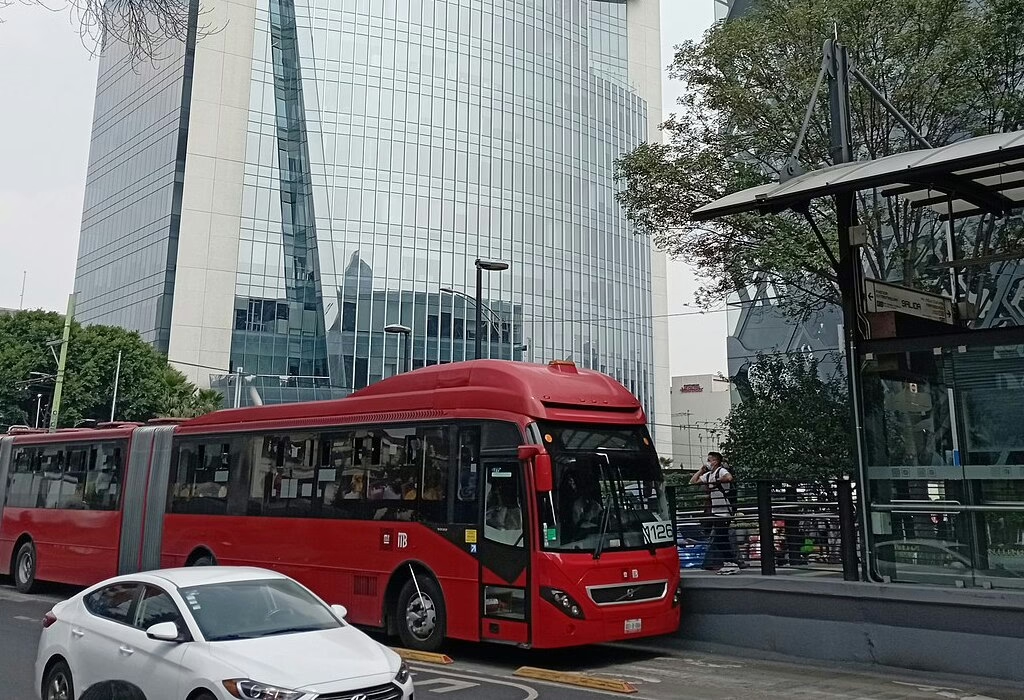
En Metrobús is another great choice. These are long buses that have their own dedicated lanes in the middle of the street. They don’t get stuck in traffic. Line 1 goes all the way down Insurgentes Avenue, which is one of the main veins of the city. To use the Metro and Metrobús, you need to buy a “Tarjeta de Movilidad Integrada” (a plastic card) at any station and load it with cash. It works for almost all public transport in the city.
How do you get to Estadio Azteca for World Cup matches?
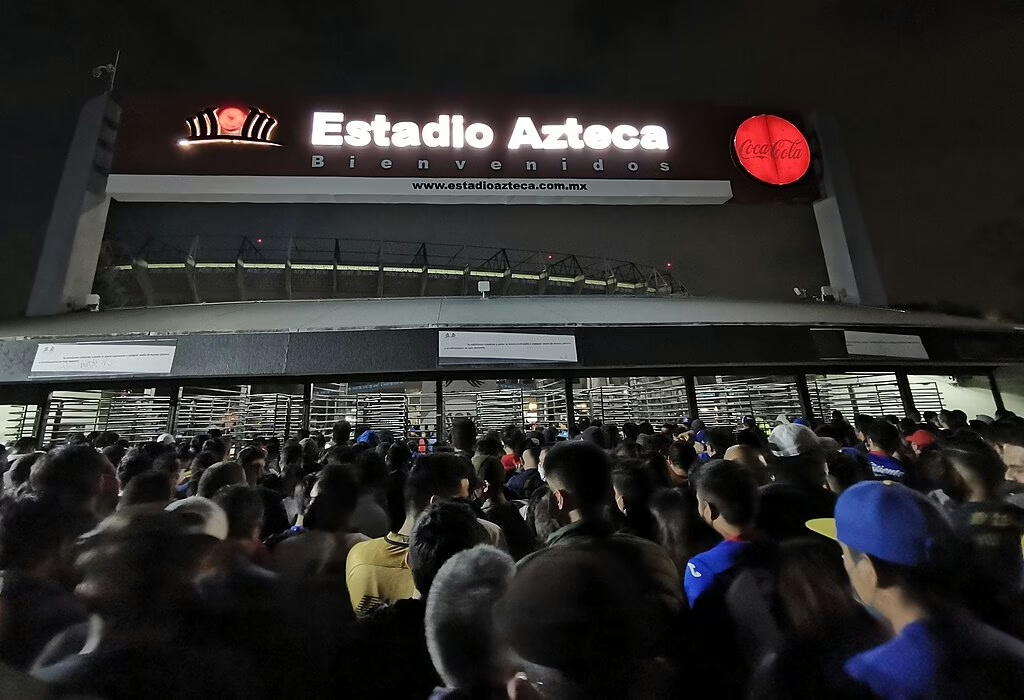
Cómo llegar a la Estadio Azteca on match day requires a plan. The stadium is located in the south of the city, and the roads around it will be closed or extremely congested.
The most reliable way is the Metro + Tren Ligero.
- Get to any Metro station and head to Tasqueña (the final station of the Blue Line 2).
- Exit the Metro and follow the signs for the Tren Ligero.
- You will need to use your transport card again.
- Ride the Tren Ligero to the Estadio Azteca station. From there, it’s a short walk to the entrance. Total cost? Less than $1 USD.
If you prefer an Uber, leave at least three hours before kickoff. Even if the app says it’s a 40-minute drive, the police checkpoints and fan crowds will slow everything down. A good tip is to have the Uber drop you off a few blocks away from the stadium and walk the rest of the way; you’ll save time and money. After the match, don’t try to call an Uber immediately. The prices will be more expensive and it will be difficult for a car to find you. Instead, walk to a nearby bar, have a drink, wait an hour for the crowds to thin out, or walk back to the Tren Ligero station.
What should fans do between matches in Mexico City?
Mexico City is one of the greatest cultural cities in the world. You shouldn’t just spend your time in bars. When there are no matches, head to Parque de Chapultepec. It’s twice as big as Central Park in New York and has a real castle on top of a hill. The Museo Nacional de Antropología is also there, and it’s a must-see to understand the history of the Aztecs and Mayans.
For foodies, go on a taco tour. Every neighborhood has its own famous “puestos” (stands). Try “Tacos al Pastor” (pork with pineapple), which is the signature dish of the city. You should also visit the Zócalo, the massive main square. You can see the Cathedral and the National Palace with murals by Diego Rivera.
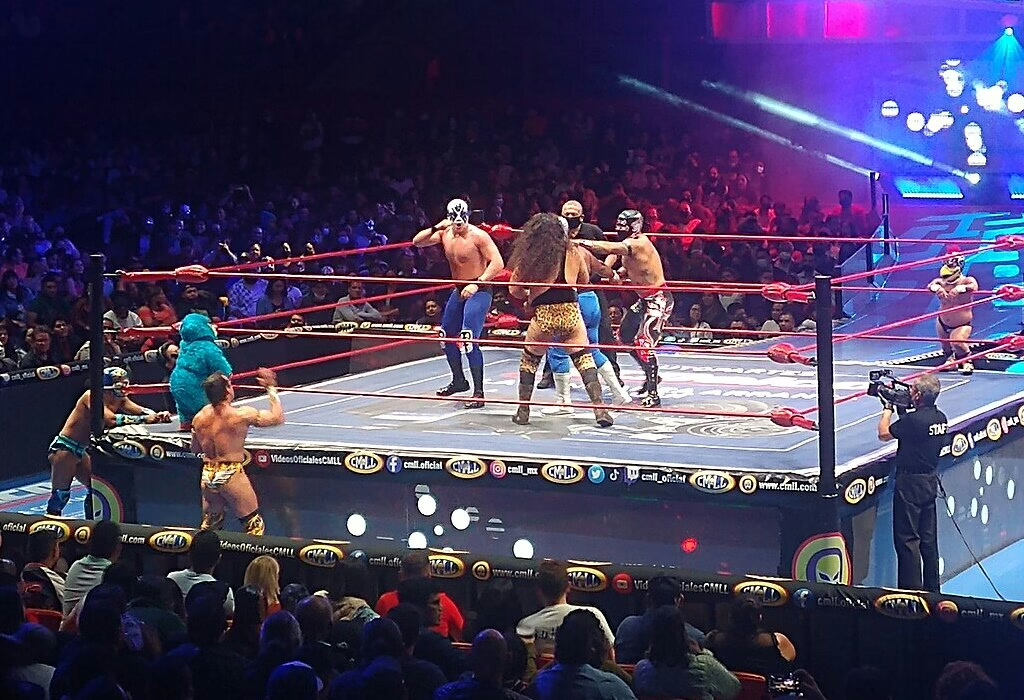
If you want a more relaxed vibe, spend an afternoon in Xochimilco. You can rent a “trajinera” (a colorful wooden boat) and float down the ancient canals while a mariachi band plays for you. It’s a bit touristy, but with a group of football fans and some beers, it is an absolute blast. Finally, check out the Lucha Libre (Mexican wrestling) at Arena México. It’s high-energy, funny, and a huge part of Mexican pop culture.
🎟️Don’t have tickets for every match? Don’t worry! You can still enjoy the atmosphere. Read our list of the Best Sports Bars in Mexico City to watch the World Cup.
What are the best day trips from Mexico City during the World Cup?
If you have a free day, you must leave the city to see the surrounding areas. The top choice is Teotihuacán. These are massive ancient pyramids about an hour north of the city. You can walk along the “Avenue of the Dead” and see the Sun and Moon pyramids. It’s best to go very early in the morning to avoid the heat and the crowds.
Another great trip is to Puebla. It’s a beautiful colonial city about two hours away. It’s famous for its colorful tiles, beautiful churches, and “Mole Poblano,” a rich chocolate-chili sauce that is world-famous. On the way to Puebla, you can also stop in Cholula, which has the largest pyramid base in the world with a church built right on top of it.
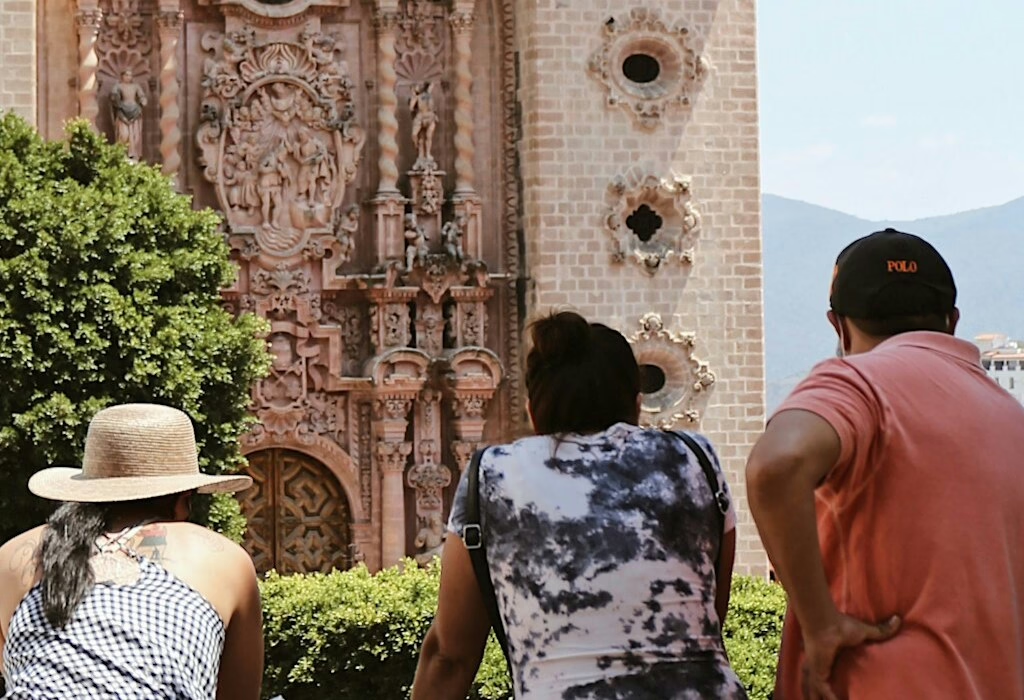
If you like “Magic Towns” (Pueblos Mágicos), head to Taxco. It is a silver-mining town built on a steep mountainside with narrow cobblestone streets and white houses. It’s very romantic and great for photos. For nature lovers, a trip to the Desierto de los Leones or the volcanoes (Popocatépetl and Iztaccíhuatl) is great for hiking. Most of these trips can be done by taking a bus from the main stations (TAPO or Central del Sur) or by booking a guided tour with a company like Vibe Adventures.
🚗Want to explore beyond the city? Discover the best nearby destinations in our guide to Top Day Trips from Mexico City during the World Cup.
Where can fans watch matches in Mexico City?
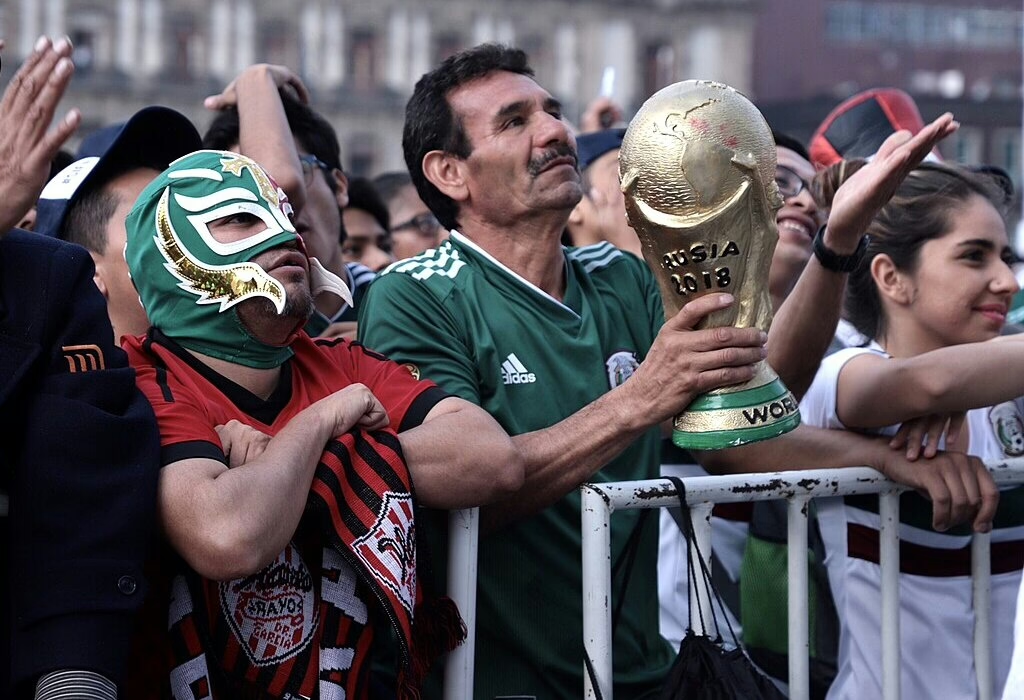
If you don’t have a ticket for the stadium, don’t worry. The city will be full of “Fan Zones” or “FIFA Fan Fests.” These are usually located in big public spaces like the Zócalo o Chapultepec. They have giant screens, food, and thousands of fans watching the games together for free.
If you prefer a bar atmosphere, head to Condesa o Roma. These areas have the highest concentration of sports bars. Look for places along Álvaro Obregón Avenue. “Cantinas” are also a great Mexican experience. These are traditional bars where you can get free snacks (botanas) if you keep ordering drinks. Salon Tenampa in Plaza Garibaldi is famous because you can watch the game while surrounded by Mariachis.
En el Polanco area, you will find more “upscale” sports bars with huge 4K screens and a wide selection of international beers. If you want to watch the game with local fans, almost every neighborhood “comedor” (small local eatery) will have a TV on. The passion for football in Mexico is so high that you won’t miss a single minute of the action, no matter where you are.
How much money do travelers need per day in Mexico City?
Your budget depends on your style, but here is a breakdown for traveling to Mexico during the World Cup:
Budget Traveler ($50 – $70 USD): You stay in a hostel, eat street tacos and market food, and use the Metro for everything. You spend very little on alcohol and stick to free fan zones. Mid-Range Traveler ($100 – $150 USD): You stay in a nice Airbnb or a 3-star hotel. You eat one “nice” meal a day and street food for the rest. You use a mix of Ubers and the Metro, and you visit a few museums or book a Teotihuacán tour. Luxury Traveler ($300+ USD): You stay in a 5-star hotel in Polanco. You eat at world-class restaurants like Pujol or Quintonil (which require booking months in advance). You use private transport and sit in the premium sections of the stadium.
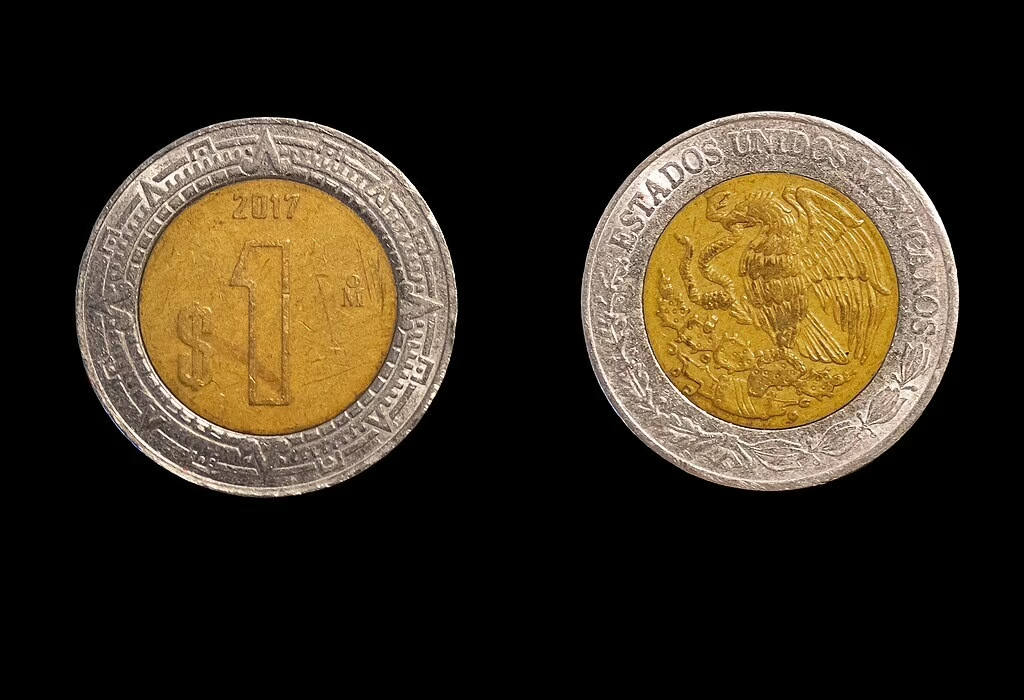
Keep in mind that cash is still king in Mexico for small things. While hotels and big restaurants take credit cards, you will need pesos for street tacos, markets, and tips. Use bank ATMs to get pesos; avoid the exchange booths at the airport as they have the worst rates.
💡Planning your budget for the trip? Check out our guide on How much does it cost to travel to Mexico for the World Cup? to avoid surprises with prices and currency exchange.
What apps should travelers use in Mexico during the World Cup?
Technology will make your trip much easier. Before you arrive, download these apps:
- Uber & Didi: For safe and reliable transport. Didi is often a bit cheaper in Mexico.
- Google Maps: It works very well for walking and for checking the real-time schedule of the Metrobús.
- Citymapper: This app is actually better than Google Maps for the Mexico City Metro system. It tells you exactly which car to get into.
- Google Translate: Download the Spanish dictionary for offline use. The “camera” feature is great for reading menus.
- WhatsApp: This is how everyone in Mexico communicates. Restaurants, tour guides, and Airbnbs will all want to text you on WhatsApp.
- ConvertUnits: To quickly check how many pesos you are spending in your local currency.
- SkyAlert: Since Mexico City is in an earthquake zone, this app is used by locals to get early warnings. It’s rare to need it, but good to have.
What mistakes should travelers avoid during the World Cup?
The biggest mistake is underestimating the traffic. If you think it takes 30 minutes to get somewhere, give yourself an hour. During the World Cup, the city will be at a standstill.
Another mistake is not staying hydrated. Because of the heat and the altitude, it’s easy to get a headache. Also, don’t drink the tap water. Always buy bottled water or use the purified water provided by your hotel. Even locals don’t drink tap water.
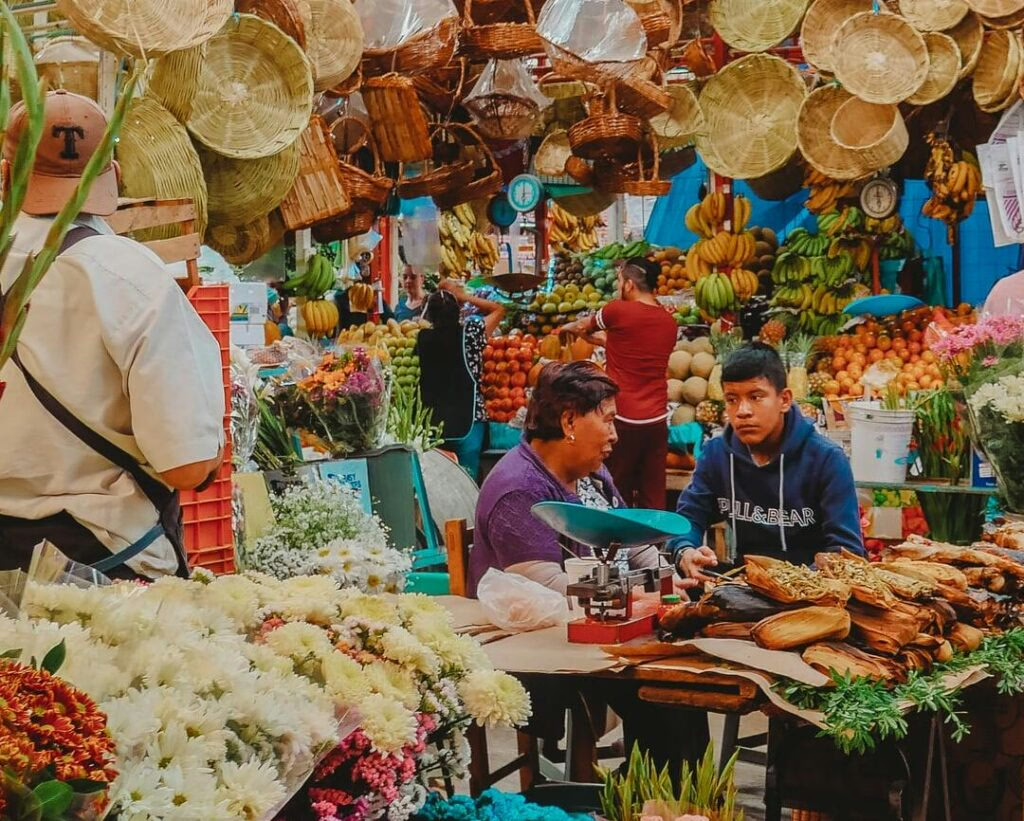
Avoid “Gringo Pricing.” In markets, people might try to charge you more. It’s okay to haggle a little bit, but be respectful. Also, don’t forget to tip. In restaurants, a 10% to 15% tip is standard. If you don’t leave a tip, it is considered very rude.
Finally, don’t stick only to the tourist areas. Mexico City is beautiful because of its neighborhoods. Go to a local market, eat a “guajolota” (tamal sandwich) for breakfast, and talk to the locals. The biggest mistake you can make is staying in your hotel room and only going to the stadium.
FAQ Section
1. Do I need a visa to visit Mexico for the World Cup? Most western citizens (USA, Canada, UK, EU) don’t need a visa for tourism. You just need a passport. Check your local embassy for updates.
2. Can I use US Dollars in Mexico City? No. Most places only take Mexican Pesos. Some big hotels might take dollars, but the exchange rate will be terrible. Use an ATM to get pesos.
3. Is the water safe to drink? No. Do not drink tap water in Mexico. Use bottled water for drinking and even for brushing your teeth if you have a sensitive stomach.
4. How do I buy tickets for the matches? Tickets are sold exclusively through the official FIFA website. Do not buy from “resale” sites, as they are often scams or the tickets won’t work.
5. Is the Metro safe at night? The Metro is generally safe as long as there are people around. However, after 10:00 PM, it is better to take an Uber directly to your door.

6. Do people speak English in Mexico City? In tourist areas like Roma and Polanco, many people speak basic English. However, in markets and taxis, it is very helpful to know some basic Spanish.
7. What is the best neighborhood for fans? Roma and Condesa are the favorites for their nightlife and central location. Coyoacán is best for those who want to be closer to the Estadio Azteca.
8. Is it expensive to eat in Mexico? It can be very cheap. You can eat street food for $5 USD or go to luxury restaurants for $100+ USD. There is something for every budget.
9. What should I wear to the stadium? Wear light clothes for the sun, but bring a raincoat or poncho. It often rains during the summer matches in CDMX.
10. How early should I get to the Estadio Azteca? At least 2 or 3 hours early. The security checks and the crowds make the entry process very slow.

I hope this guide makes traveling to Mexico for the 2026 World Cup the best experience of your life. Start planning now, and see you at the Azteca!