
 EN
EN  ES
ES  FR
FR  PT
PT  DE
DE  IT
IT 

Mexico City may be a bustling metropolis, but near this city, there are still national parks where you can enjoy nature and its surroundings. They are perfect for your next trip!
All are easily accessible from the city (whether by public or private transport), and here are our top 10 of the best national parks near Mexico City to take advantage of the next time you are in the Mexican capital. Check out our hiking in Mexico article. 🏞️
Please give a standing ovation to our top 10 winners of the best national parks around Mexico City 🏆👏👏👏🎉
- Iztaccihuatl-Popocatepetl National Park ⛰️
- Grutas de Cacahuamilpa National Park 💧
- La Malinche National Park 🌋
- La Marquesa National Park 🌳
- Nevado de Toluca National Park ❄️
- Cumbres del Ajusco National Park 🌿
- El Chico National Park 🏞️
- El Tepozteco National Park 🌲
- Lagunas de Zempoala National Park 🌊
- Bosencheve National Park 💦
- Bonus: Desierto de los Leones 🦁
- Two national parks outside of Mexico City 🌳
- Cabo Pulmo National Park🌊
- Sumidero Canyon National Park 🌳
- Frequently Asked Questions❔
1. Iztaccihuatl-Popocatepetl National Park
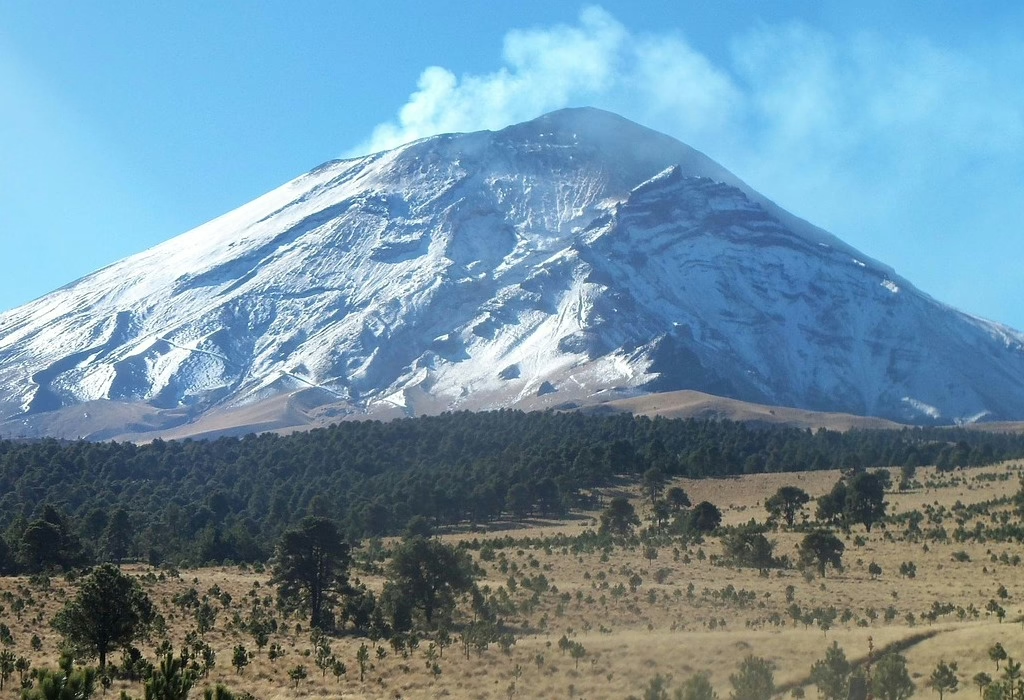
To list the top 10 National Parks near Mexico City, we must begin with one of the most famous ones: the Iztaccihuatl-Popocatepetl National Park. It was founded in 1935 and is among the oldest Mexican National Parks. With an area of 39.000 ha, the park stretches through three states (Estado de Mexico ,Puebla, Morelos), and is part of the Sierra Nevada.
The outstanding biodiversity and richness of its ecosystems provide environmental services as well as wildlife, plants, and mineral goods, which are currently used by the inhabitants surrounding the volcanoes. In ancient times, this area had a deep cultural significance. The pre-Hispanic locals considered both Iztaccihuatl and Popocatepetl volcanoes sacred and associated with the cult of water and rain.
Activities:
- Hike in the Iztaccihuatl and near some natural areas.
- Have a horse-riding moment.
- Camp among nature.
- Jump off the zipline.
- Visit the National Park’s ecotourism center.
- Take ATVs and bicycle tours.
- Enjoy the delicious gastronomy of the area.
- Hiking and climbing Popocatepetl is not recommended because it is still an active volcano.
Distance from Mexico City (Center): ~2 hours 20 min by car
2. Grutas de Cacahuamilpa National Park
With an area of 1598.26 ha, this national park, located in the north of Guerrero, hosts caves considered one of the largest in the world and one of the most visited in the country. It’s also the place where the Amacuzac River is born, and it is the habitat of freshwater otters surrounded by low jungle.
The park’s highlights are spectacular rock formations in its limestone caves, which were formed 85 million years ago. They are believed to have been sculpted by the current of the San Jeronimo River, which currently runs below the cave at a depth of 95 m. In the caves, one can visit its 19 natural rooms. Some were used for concerts and hosted by artists such as Andrea Bocelli and Miguel Bosé.
Activities:
- Practice some rafting in the Amacuzac River.
- Try some rappelling.
- Jump off the zip line.
- Do your best at mountain biking.
- Go through subway rivers.
- Stay camping with your friends.
- In the caves, visit its 19 natural rooms full of colors and lights.
- Have fun in the middle of nature and go over the suspension bridge to test your dexterity.
Distance from Mexico City (Center): ~2 h 20 min by car
3. La Malinche National Park
Continuing with our top 10 national parks near Mexico City, we share this fantastic national park with you. Named after its giant volcano, La Malinche became a National Park in 1938 with an area of 45,711 hectares. It is primarily famous for its proximity to the capital and its landscapes.
It also serves as a perfect altitude acclimatization sport for those planning to hike taller Mexican volcanos. A classic trail from a base camp will lead you to the first shelter on the slopes of this extinct volcano. You can also reach the summit by roads that rise from other small towns on the volcano’s slopes.
Activities:
- Hike to the top of La Malinche volcano.
- Stargaze while camping in the middle of nature.
- Visit the Malintzi Vacation Center for a pleasant time.
- Take advantage of the fact that you are close to the magical town of Huamantla and visit it.
- Taste some of the gastronomy of the place in its different places.
Distance from Mexico City (Center): ~2 h 49 min by car
4. La Marquesa National Park

Officially named after Miguel Hidalgo, a nationally important character, this national park is chiefly known as La Marquesa. This protection area in Estado de Mexico (State of Mexico) boasts 1,760 hectares of coniferous forests.
Additionally, it hosts several fish farms and restaurants serving traditional Mexican food and drinks. The park contains landscapes and viewpoints, such as great ridges and peaks of various shapes and colors. Walking through the park can lead to encounters with opossums, gray foxes, rabbits, squirrels, lizards, and various birds. Check out also our article about Dinamos National Park in Mexico City.
Activities:
- Rent ATVs and go-karts.
- Do some horseback riding.
- Practice mountain biking.
- Hiking in natural areas and mountaineering are some of my hobbies.
- Camp with your family or friends.
- Play different ball games outdoors, such as football, baseball, volleyball, etc.
- Try delicious Mexican snacks (antojitos).
- Catch a few trout in the various restaurants in the area.
Distance from Mexico City (Center): ~50 min by car
5. Nevado de Toluca National Park
Located near the capital of the Estado de Mexico, this park is home to the fourth-highest peak in Mexico. It is generally famous for two picturesque lagoons that lie in the volcano’s crater.
It’s worth mentioning that Nevado de Toluca is the only volcano in the world whose crater is accessible by road. Additionally, from its top, you have one of the most beautiful views of the Toluca Valley.
Activities:
- In the lakes, you can fish rainbow trout (with prior authorization).
- Practice deep-sea diving (also with prior authorization).
- Hike on the authorized rails.
- Experience mountain biking.
- If you are into history, you can visit several nearby archaeological sites after the hike.
- Taste delicious Mexican food nearby.
- Take some excellent photos of the incredible landscapes that Nevado offers.
Distance from Mexico City (Center): ~3 hours by car
6. Cumbres del Ajusco National Park
In fact, the mountains of Cumbres del Ajusco can be seen from almost anywhere in the city, as they exceed 3,900 meters. The Xitle volcano, where you can practice caving, trekking, and mountain biking, is also within the national park.
The park covers 920 hectares of vegetation predominated by Hartweg’s pine, oyamel, and subalpine forests. This site is home to the last specimens of the volcano rabbit, locally known as teporingo, as well as the opossum, the shrew, the coyote, the weasel, the skunk, and the wild cat, among others.
Activities:
- Hike and admire the mountain’s landscape.
- Do something more extreme, such as motocross riding.
- Practice some mountain biking.
- Ride an ATV (all-terrain vehicle).
- Have a trekking experience.
- See some lovely animals that inhabit the place.
- If you are an extreme adventurer, you can try caving activities.
Distance from Mexico City (Center): ~1 h 30 min by car
7. El Chico National Park
Located just 2 hours by car from Mexico City in Hidalgo, this national park covers 2,739 hectares. It is populated by dense pine, oak, and oyamel forests and innumerable rock formations of great beauty. This beautiful natural park is one of the oldest in the country, decreed as such in 1898 by the then-president of Mexico, General Porfirio Díaz.
Within the park, there is an alpine lodge of the CONANP (National Commission of Protected Natural Areas) and various tourist centers with adequate facilities for ecotourism activities. You will fall in love with the natural beauty and rocky elevations, making it a challenge for both expert and novice climbers.
Activities:
- Camp with your friends.
- Practice mountaineering.
- Hike as much as you want.
- Try some rock climbing.
- Do some sport fishing.
- Practice mountain biking.
- Observe various plants and wildlife.
Distance from Mexico City (Center): ~1 h 52 min by car
8. El Tepozteco National Park

Although many think El Tepozteco is in Morelos, half of this national park lies in Mexico City. The Tepozteco has some ruins located on the mountain (Tepozteco). By the way, these ruins are the main point of interest in the park and attract multiple visitors on weekends. The area belongs to Mexico’s Neovolcanic Axis and consists of various hills of extraordinary morphology.
Erosion and other movements have left deep ravines and peaks in the terrain. The area also stands out for its variety of flora: in warmer areas, there is a greater affinity with plants of Neotropical origin, and in parts with cooler climates, there is Nearctic and partially Andean vegetation.
Activities:
- Explore the area by hiking and trekking.
- Practice like a pro, some rappel.
- Observe the wildlife and take some pictures of it.
- Visit and learn more about the Tepozteco Pyramid.
- Escape to the magical town of Tepoztlan and get to know its gastronomy and charm.
- Try some exquisite Mexican dishes near the area.
Distance from Mexico City (Center): ~1 h 40 min by car
9. Lagunas de Zempoala National Park
Lagunas de Zempoala (Zempoala Lagoons) is a beautiful area amidst mountains and valleys, where seven beautiful lakes with emerald water are located. For hikers, numerous trails cross gorges with mushrooms, aromatic herbs, giant oaks, pines, and oyamels. Additionally, in the park, one can find a camping area, parking, and Mexican snacks and crafts vendors on weekends.
Activities:
- Rest in nature and contemplate the landscape.
- Organize a fabulous picnic.
- Practice mountaineering on one of its 2 steep mountain peaks.
- Hike some of its trails.
- Take a boat ride.
- Learn about local plants and wildlife in its visitor center.
- Find the camping area and enjoy nature while having a snack.
Distance from Mexico City (Center): ~1 h 20 min by car
10. Bosencheve National Park
Nestled in the Neovolcanic Mountain Range, this national park lies west of Mexico City in the Estado de Mexico and Michoacan. It has a temperate, humid climate with altitudes between 2,480 and 3,240 m above sea level. Its vast forests mainly consist of firs and pines, characterized by their uniform height, age, and relative lack of shrub vegetation.
Among the park’s top attractions are two beautiful lakes (Laguna Seca and Laguna Verde), the habitat of numerous migratory water birds. Hawks, woodpeckers, squirrels, rabbits, and armadillos are common in this area.
Activities:
- Hike around.
- Camp among Mother Nature.
- Organize a picnic afternoon.
- Do some sport fishing.
- Observe its beautiful landscapes and wildlife.
Distance from Mexico City (Center): ~1 h 50 min by car
Bonus: Desierto de los Leones (Lions Desert)

On the way to La Marquesa National Park, there is a national park called ‘Desierto de los Leones.’ This place is characterized by keeping many of the natural resources alive. The name ‘desert’ comes from the tranquility of the place, not because there is sand.
Its calm, peace, and tranquility are unique, so much so that in 1611, some monks of the order ‘Discalced Carmelites’ chose this place to be in contact and harmony with nature and to be in silence, contemplating the wonders of God.
Activities:
- Explore and hike in the middle of nature.
- Eat delicious food in the stands near the place.
- Organize a picnic.
- Cycling through the immense forest.
- Learn about the history of the ex-convent.
- Enjoy the beautiful green natural areas.
- Discover the beautiful gardens in the area.
- Take a tour of legends at night.
- Visit the Emiliano Zapata Museum.
Distance from Mexico City (Center): ~1 h 3 min by car
Two national parks outside of Mexico City
You should know that Mexico has 67 national parks; however, we want to tell you about two parks that we think are worth visiting. The first is Cabo Pulmo, located in Baja California Sur; the second is Sumidero Canyon, located in the state of Chiapas. Keep reading and we’ll tell you how incredible these places are.
Cabo Pulmo National Park
Located in Baja California Sur, this park, besides being incredible for all the nature it contains, is a clear example of conservation, community, and tourism. This park protects one of the oldest coral reefs in the Pacific and is home to exceptional marine biodiversity.
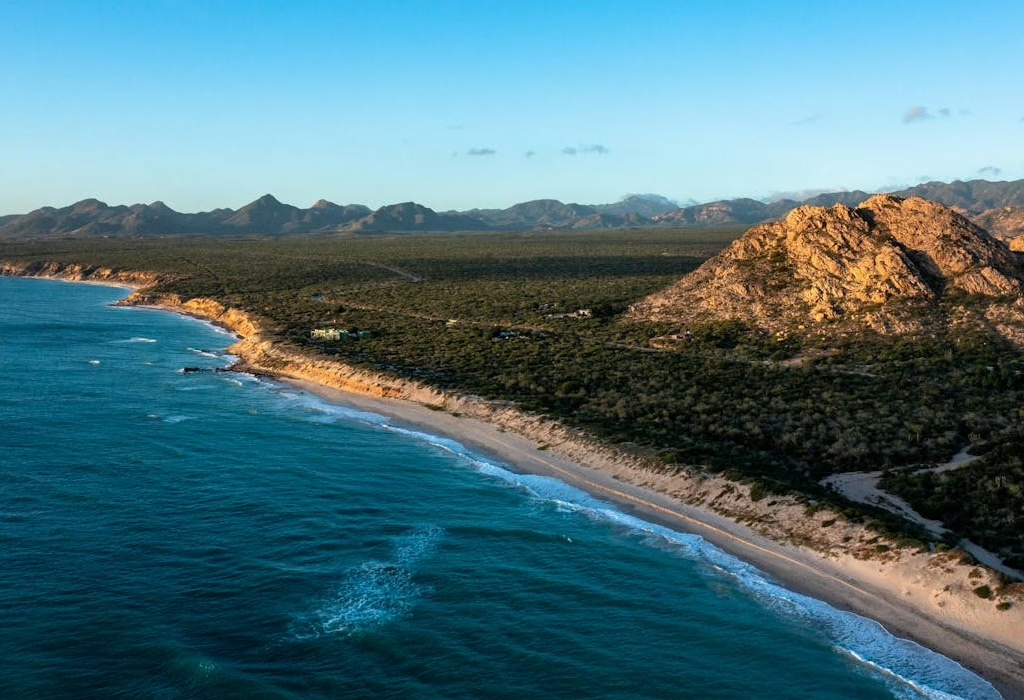
What can I do in Cabo Pulmo?
In this area, you have the opportunity to observe healthy ecosystems, which you can see from the large number of fish, sharks, turtles, and many other species that inhabit it, the result of decades of environmental protection and responsible community management.
You should know that, as an ecotourism area susceptible to climate change, efforts are made to minimize the impact of large-scale tourism, so the number of visitors and permitted activities are limited. Therefore, if you decide to visit, we recommend researching in detail to ensure a unique experience.
Another important point to consider is that local communities actively participate in protecting the park and providing services in the area, which adds cultural, social, and educational value by emphasizing the preservation of protected natural areas. If you’ve already decided and want to visit this national park, we recommend contacting an authorized operator to make the most of your experience.
Sumidero Canyon National Park
Located in the state of Chiapas, in southern Mexico, is one of the most impressive landscapes due to its vast canyon and biodiversity.
We are sure that if you visit, you will be amazed by its incredible scenery. You can explore it by traveling along its river, where it is common to see birds, reptiles, mammals, and other species that inhabit its rocky walls, which rise hundreds of meters high.
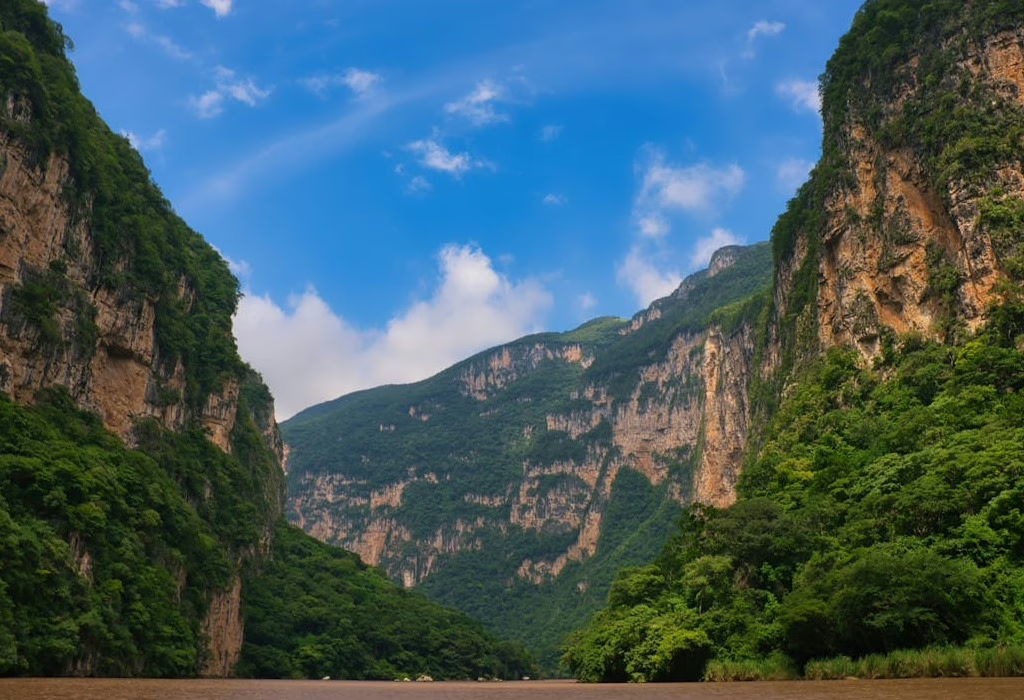
What to do in Sumidero Canyon?
If you are a traveler who loves photographing nature, you will love this park because you can observe its flora and fauna firsthand. It’s worth noting that Sumidero Canyon offers an experience comparable to the great canyons of North America, but with a unique identity distinguished by its tropical vegetation and the cultural context of southeastern Mexico.
Furthermore, its proximity to cities like Tuxtla Gutiérrez and San Cristóbal de las Casas makes this park a must-see stop on any itinerary, allowing you to combine nature, indigenous culture, and colonial architecture.
Therefore, if you’re looking for a short, accessible experience that allows you to connect with nature, visiting Sumidero Canyon National Park is perfect for you.
Frequently Asked Questions
What is the entrance fee to national parks in Mexico?
This is one of the most frequently asked questions among international travelers: the cost. However, we can say that, in general, national parks in Mexico are very affordable.
• The average entrance fee ranges from $30 to $100 Mexican pesos per person. Keep in mind that marine parks or those with specialized services may have higher fees.
• Sometimes there is an additional fee for specific activities, if you choose to participate.
The entrance fee is usually used for conservation and maintenance of the park. If you are interested in specific park, you can find the cost and the schedule here.
Do national parks in Mexico have set hours?
Yes. Most national parks have defined access hours, generally between 8:00 a.m. and 5:00 p.m.
Some parks allow:
• Early access for guided activities with authorized personnel. Extended hours during peak seasons (we suggest asking your tour operator). And camping with special permits. We always recommend checking the specific hours before your visit, as they may vary depending on the season or weather conditions.
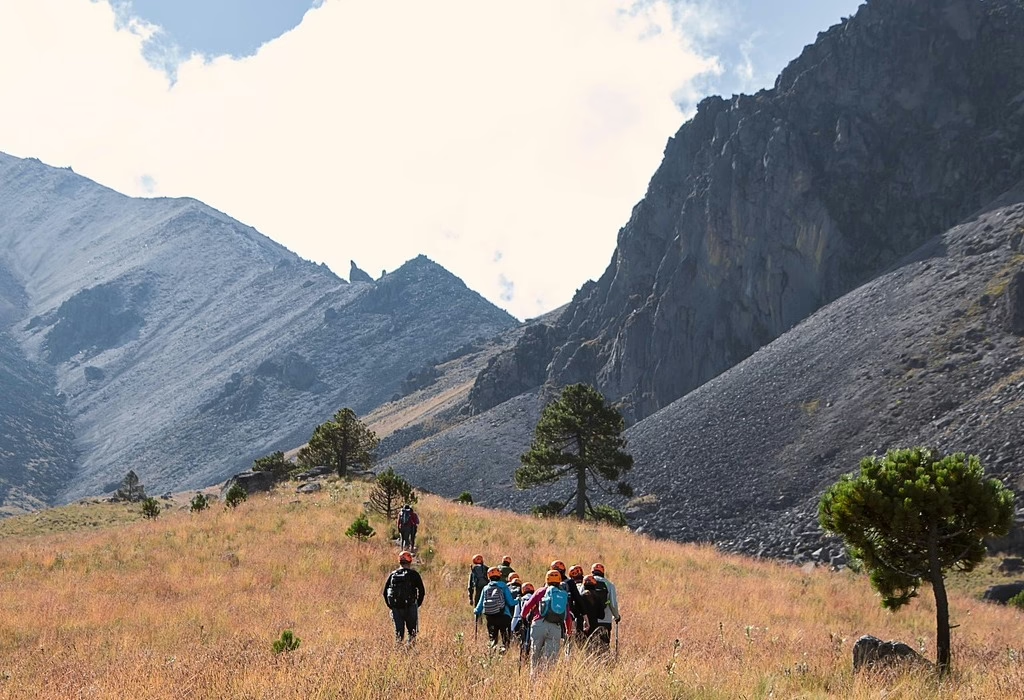
When is the best time to visit national parks in Mexico?
Answering this question isn’t easy, but we can say that it depends on the type of park you want to visit and the experience you’re looking for. However, here’s some information that will surely help you choose according to what you’re looking for.
• November to April: dry season in most of the country, perfect for hiking and outdoor activities.
• May to September: rainy season in tropical areas. Although the landscapes tend to turn green, humidity increases. During this season, we recommend keeping an eye on the weather, as rain can be crucial and decisive for any activity.
• Winter: this weather is ideal for enjoying coastal parks; while in the high mountains there may be snow, something very uncommon in Mexico and only found in national parks. As a side note, you should know that when this happens, Mexicans take advantage of the opportunity to visit the parks and enjoy this spectacle, so if you go during this time, you’ll undoubtedly find more people than usual.
We know that, as an international traveler, winter is often an ideal time to escape the cold and reconnect with the sun and tropical climate of Mexican beaches.
Can you combine a visit to national parks with other tourist destinations?
Yes. In fact, if you plan your trip or travel with a tour operator, you’ll notice that these destinations are often part of the itinerary because they are close to major cities. This is undoubtedly one of the great advantages of traveling through Mexico, because in addition to the parks, you’ll find you can explore:
• Colonial cities, archaeological sites
• Culinary destinations, magical towns (Pueblos Mágicos)
This allows you to create itineraries that combine nature, culture, and relaxation.
What should I wear to visit a national park in Mexico?
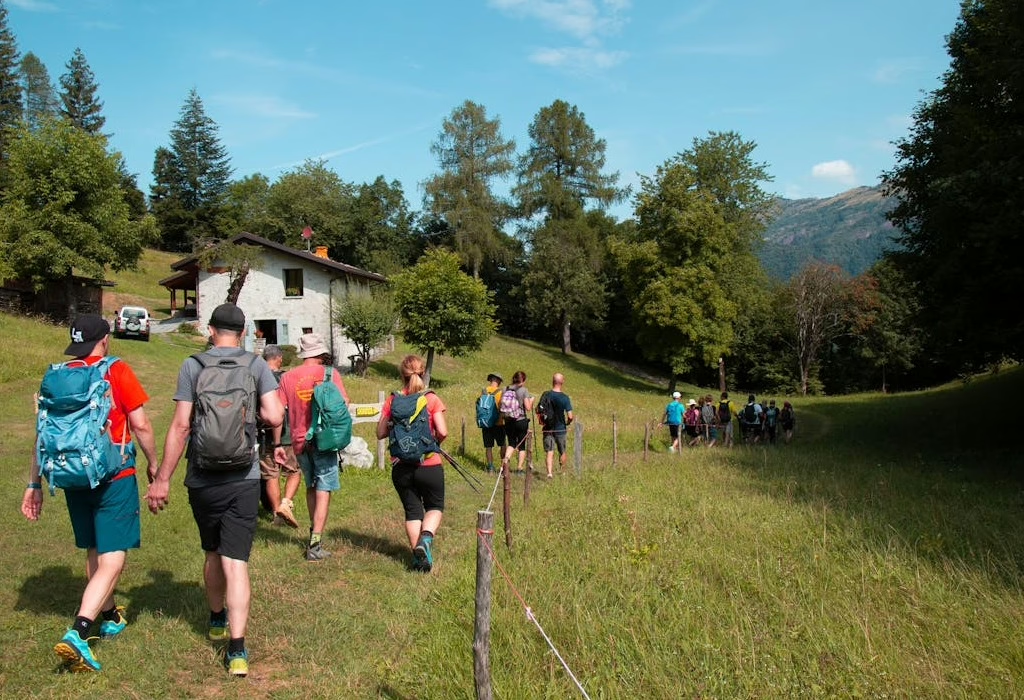
While your clothing will depend on the time of year you visit the park, we always suggest checking the weather forecast a few days beforehand to get an idea of what you should pack. In the meantime, here are some basic items to consider: comfortable walking shoes, clothing appropriate for the weather and sunscreen and a hat. Also, plenty of water, a light backpack and cash.
If needed, you can bring a change of clothes in case of any unforeseen circumstances. For very specific activities, additional equipment may be necessary; ask your operator, they usually rent the extra equipment you may need.
This is our list of top national parks around Mexico City. And what are your favorite national parks around Mexico City? Or is there another nature area in Mexico that is at the top of your list? Write it in the comments!