









Quick Answer: What is the best golden triangle India itinerary?
O melhor golden triangle India itinerary takes eight days: two in Delhi, one in Agra for the Taj Mahal at sunrise, three in Jaipur and a day to return. Travel between October and March for dry weather, and book a driver or a guided tour to save time on the roads.
If you are going to India for the first time, the golden triangle India route is the classic place to start. In about a week, you see the capital, the Taj Mahal and the pink city of Rajasthan. Good roads connect all three, and the whole loop is easy to manage with a driver and a local guide.
This guide explains how to split your time, when to travel and what to eat. It also shows where travellers waste energy and how to avoid it. If you would rather skip the planning, you can jump straight to our 8-day Golden Triangle tour and read the rest later.
What Is the Golden Triangle in India?
The golden triangle links three cities: Delhi, Agra and Jaipur. Each corner sits about four to six hours from the next by road, so the full loop covers roughly 720 km. It is called a triangle because you finish where you started. Most itineraries begin and end in Delhi, where most international flights land.
The appeal is variety. Delhi gives you Mughal tombs, busy markets and street food. Agra gives you the Taj Mahal and a huge red sandstone fort. Jaipur offers palaces, bazaars and a hilltop fortress with views across the valley. As a result, you see three very different sides of northern India without changing hotels every night.
Why the Golden Triangle Inspires First-Time Travellers
Few routes pack so much wonder into so little time. Within a week, you watch the Taj Mahal change colour at dawn, climb a hilltop fort above a lake and bargain for block-printed fabric in a bazaar that has traded for centuries. It is a journey that changes how you see travel, because every day brings something you will still be telling friends about next year.
- Living history: Mughal tombs, Rajput palaces and UNESCO sites within a few hours of each other.
- Colour everywhere: pink Jaipur, golden sandstone and, in March, the festival of Holi.
- Food that stays with you: chaat in Old Delhi, petha in Agra and dal baati churma in Jaipur.
How Many Days Do You Need?
Eight days is the sweet spot. You can squeeze the loop into five, but you will spend most of it in a car. With eight days, you get a proper day in each city, a gentle arrival and room for extras such as a village stop or a cooking class.
- 5 days: only if you have very little time. Expect long drives and short visits.
- 8 days: a comfortable pace, time to recover from a long flight and space for the extras that make a trip memorable.
- 10 to 12 days: add Udaipur, Jodhpur or Varanasi and turn the triangle into a longer Rajasthan journey.
Golden Triangle India Itinerary at a Glance
| Dia | Onde | Experiência principal |
| Dias 1–2 | Delhi | Old Delhi markets, Humayun’s Tomb, India Gate |
| Dia 3 | Delhi to Agra | Agra Fort at sunset |
| Dia 4 | Agra to Jaipur | Taj Mahal at sunrise, Fatehpur Sikri, Chand Baori |
| Days 5–6 | Jaipur | Amber Fort, City Palace, Hawa Mahal, bazaars |
| Dia 7 | Jaipur to Delhi | Return drive and last-minute shopping |
| Dia 8 | Delhi | Airport transfer |
Day-by-Day Golden Triangle India Itinerary
Days 1 and 2: Delhi
Give yourself the first evening to rest. Jet lag is real, and Delhi is intense on arrival. On the second day, split the city into two halves. In Old Delhi, wander Chandni Chowk, visit the Jama Masjid and eat your way through the narrow lanes. In New Delhi, see India Gate and the leafy avenues built by the British.
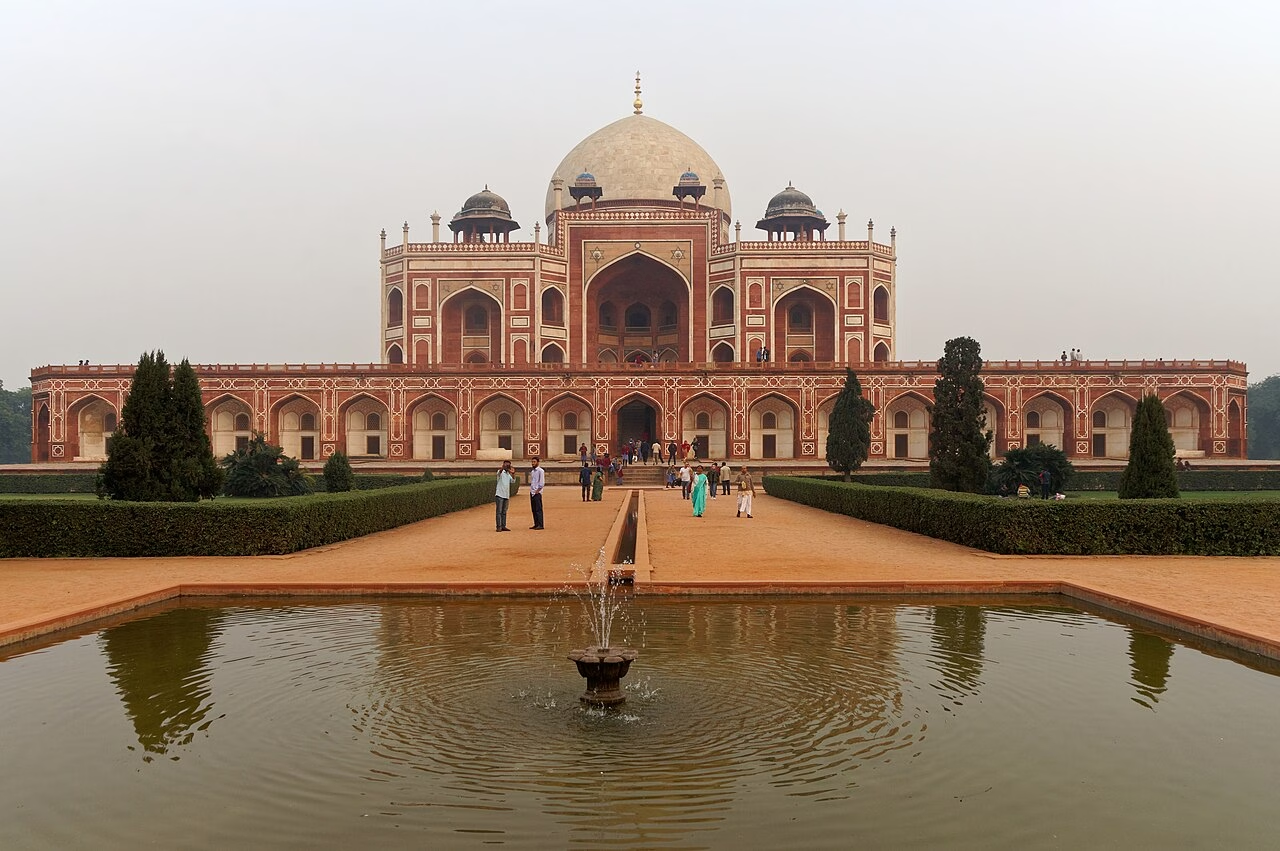
Humayun’s Tomb is the quiet highlight. This garden tomb inspired the Taj Mahal, and it is far less crowded. It is also a Patrimônio Mundial da UNESCO, so allow at least an hour to enjoy it properly. A rickshaw ride through Old Delhi is a fun way to take in the spice stalls, wires and temples in one go. Hold on tight and keep your bag on your lap.
Day 3: Delhi to Agra
The drive takes around four hours on the expressway. Stop at a roadside dhaba for your first proper thali, then check in and rest. In the late afternoon, visit Agra Fort. The fort is huge, and from its walls you get a first view of the Taj Mahal across the river, glowing in the evening light.
Day 4: The Taj Mahal at Sunrise, Then Jaipur
This is the day everybody dreams about. Be at the gate early, because the first entry slot is the quietest and the light is soft. Plan about two hours inside. The marble changes from grey to pink to gold as the sun rises, which is why so many travellers call it the highlight of the Taj Mahal visit.
After breakfast, drive to Jaipur. On the way, stop at Fatehpur Sikri, an abandoned Mughal capital in red sandstone that many visitors skip. Then pause at Chand Baori, an astonishing stepwell in the village of Abhaneri. Note that the Taj Mahal is closed on Fridays, so check the day of the week before you finalise your plans.
Days 5 and 6: Jaipur
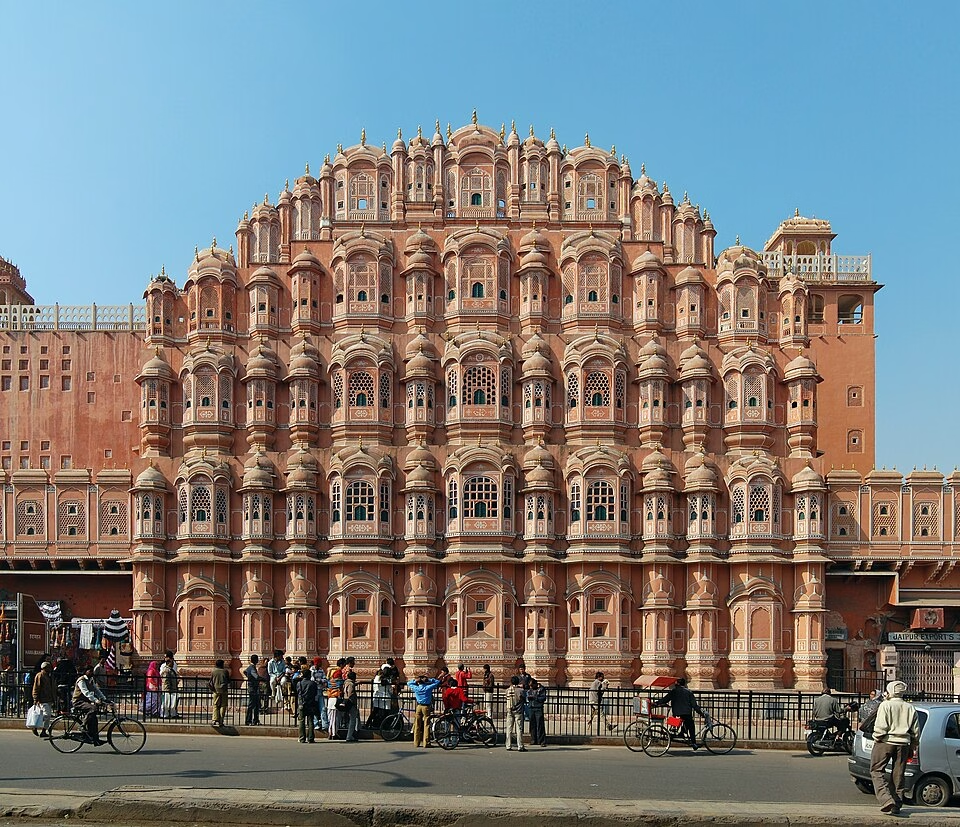
Jaipur is the fun corner of the golden triangle. Start with Amber Fort in the morning, before the heat and the crowds arrive. Next, visit the City Palace, the Jantar Mantar observatory and the facade of Hawa Mahal, the Palace of Winds. Its honeycomb windows let royal women watch street life unseen. For the best photo, go to a café across the street instead of fighting for space on the pavement.
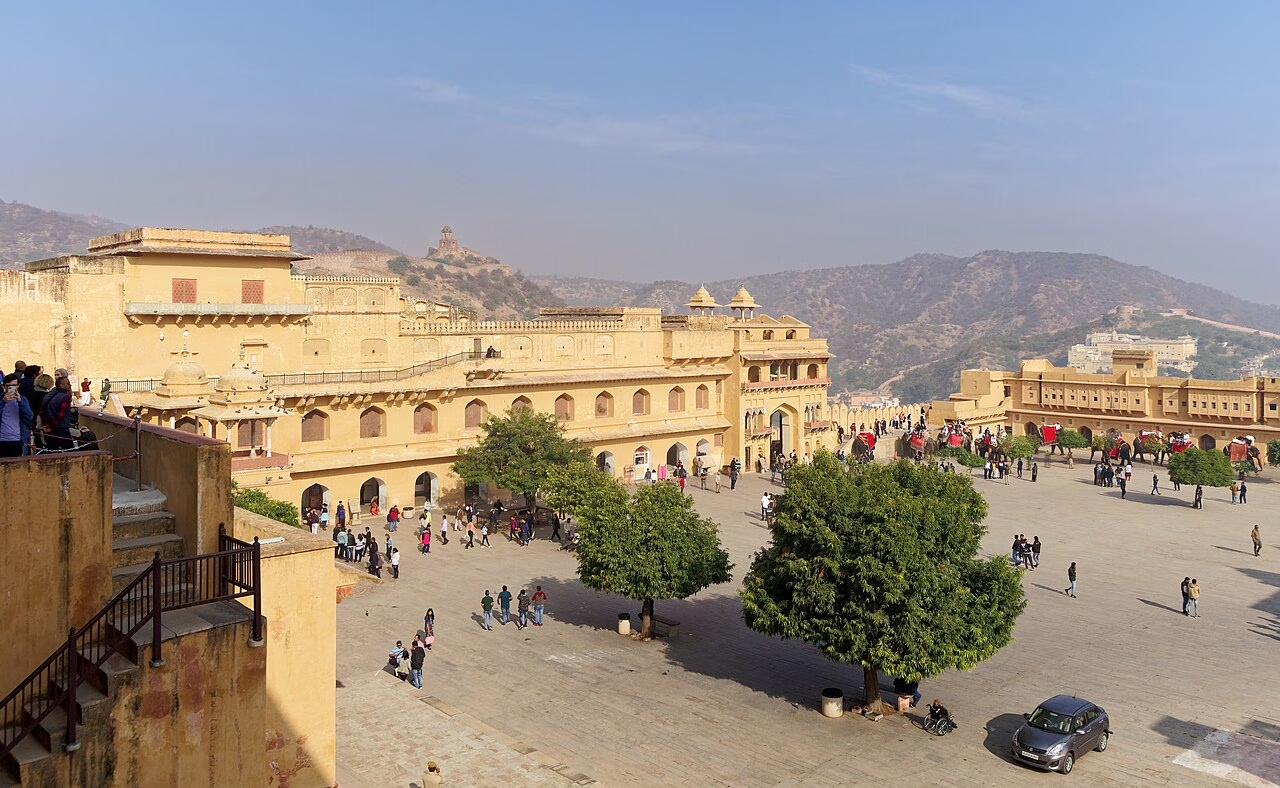
Spend the second afternoon in the bazaars. Johari Bazaar is the place for jewellery and gemstones, while Bapu Bazaar sells textiles, block-printed fabrics and leather shoes. Bargaining is expected, so start at about half of the first price and settle somewhere in the middle, with a smile. Jaipur’s old city is also a UNESCO World Heritage city, which says a lot about how well its streets and palaces have been preserved.
Days 7 and 8: Back to Delhi and Departure
The drive back takes five to six hours. Start early, stop for lunch and use the afternoon for final shopping or a rest at the hotel. If your flight leaves late, an evening visit to Lodhi Gardens or Khan Market is a gentle way to finish. On day eight, leave plenty of time for the airport, because Delhi traffic can surprise you.
Best Time to Visit the Golden Triangle
The best months for the golden triangle India loop are October to March. Days are warm and dry, and nights can be cool, especially in December and January. Here is how the seasons compare:
- October and November: clear skies after the monsoon, festival season and Diwali lights.
- December and January: cool weather and some morning fog. Bring a warm layer.
- February and March: pleasant temperatures and, in March, the festival of colours.
- April to June: very hot, often above 40°C. It is possible, but plan indoor stops in the afternoon.
- July to September: monsoon season, with fewer tourists and green landscapes but plenty of humidity and rain.
Golden Triangle India During Holi
March is a special time to go. Holi turns streets into a party of coloured powder, music and sweets. A tour that combines the golden triangle with Holi gives you the best of both worlds: the classic sights and one of the most joyful days on the Indian calendar. Our Holi Festival Tour with the Golden Triangle sets aside a full day to celebrate with local hosts.

If you like the idea of timing your trip around local celebrations, our guide to the legends of Asia explains the stories behind many Asian traditions. It makes an excellent warm-up read before you land in Delhi.
What to Eat on the Golden Triangle
Food in northern India is a highlight on its own. Do not be afraid to try new things, but follow a few simple rules. Eat where it is busy, choose food that is served hot and drink bottled or filtered water.
- Delhi: butter chicken, chaat, parathas in Paranthe Wali Gali and sweet jalebi.
- Agra: petha, a translucent candy made of ash gourd, and bedai with spicy potato curry for breakfast.
- Jaipur: dal baati churma, laal maas for meat lovers and a glass of lassi on a hot afternoon.
Vegetarians are very well served everywhere, because India has one of the world’s best vegetarian cuisines. For more ideas on how food shapes a trip, browse our off-the-beaten-path activities, which include plenty of local tasting experiences.
How Much Does a Golden Triangle Trip Cost?
Costs vary a lot, because transport, hotels and guides make up most of the budget. Independent travellers can keep daily costs low with trains, simple hotels and street food. However, private drivers, licensed guides and entrance fees for foreign visitors add up quickly. A package tour usually gives you a fixed price that covers most of these items.
To stretch your budget, travel in the shoulder months of October and March, and book hotels early. Our 22 tips for traveling on a budget include several tricks that work well in India, from comparing transport options to eating where locals eat.
Where to Stay and How to Get Around
Hotels make a big difference in a trip this busy, because you come back tired and want a quiet place. In Delhi, look at neighbourhoods such as Connaught Place or the area around Lodhi Road, which are central and calmer than the old city. In Agra, choose a hotel within a short drive of the Taj Mahal gate, so your sunrise visit does not start at 4 a.m.
In Jaipur, heritage havelis and small palace hotels are a real treat. They often offer better value than modern chains, and the courtyards and rooftop dinners are part of the experience. Book rooms with air conditioning from April to October, and ask for a quiet room away from the street.
You have three realistic options between cities. A private car with a driver is the most flexible, and you can stop whenever something catches your eye. Trains are comfortable and cheap on the Delhi to Agra leg, where the Gatimaan Express takes about 100 minutes. Buses exist, but they are slow and rarely worth it on a short trip. Expect road travel to take longer than the map suggests, because traffic, cows and festival processions are part of the journey.
Practical Tips for Your Golden Triangle India Trip
Dress for Respect and for Heat
Light cotton clothes that cover shoulders and knees are comfortable in the heat and respectful at temples and mosques. Bring easy slip-on shoes, because you will take them off often. A scarf is useful as a head cover, a sun shield and an extra layer on cold mornings.
Use a Licensed Guide at the Big Sites
The Taj Mahal, Agra Fort and Amber Fort are far better with a knowledgeable guide. A guide also helps you skip some of the touts who wait outside. Agree on the price before the tour starts, or book it as part of an organised package. If you like to understand the history behind what you see, our article on ancient sites around the world offers useful context.
Plan Your Visa and Money
Most visitors need a visa, and the e-visa is simple but takes a few days to process. Always check the rules on the official Indian e-visa website, because requirements change. Cards are widely accepted in hotels and restaurants, but keep small notes for tips, rickshaws and markets. An eSIM or local SIM makes maps, taxis and translation much easier.
Stay Safe and Avoid Common Scams
The golden triangle is well travelled and generally safe. The most common problems are overpriced shops that a driver steers you towards and gem scams. If someone tells you a site is closed and offers an alternative, check with your guide first. For broader advice, read our 15 dicas de segurança para viagens before you fly.
Pace Yourself
India is loud, busy and full of life. Build in downtime, because many travellers find the second or third day the hardest. After that, it clicks. Take a break at the hotel pool, drink plenty of water and do not try to see everything. Finally, keep a few quiet moments to take notes or photos, and use our tips for keeping your travel memories alive.
Tour or Independent Trip?
You can do the golden triangle independently with trains, drivers and apps. It is rewarding if you enjoy planning and flexibility. The trade-off is time, because tickets, transfers and closures take effort, and one delay can ruin a tightly planned day.
A small-group or private tour handles the logistics, so you can focus on the places. You get a driver, hotels in the right areas, local guides and a rhythm that hundreds of travellers have already tested. If this is your first trip to India, a tour is a very good way to start and build confidence for a second, more independent journey.
Ready to book? Take a look at our Golden Triangle tour for the classic 8-day route, or browse all our small-group tours if you want to combine it with other regions.
Informative Video: Golden Triangle India Travel Guide
Want a preview before you go? This video walks through Delhi, Agra and Jaipur and shows what the route looks like on the ground.
What to Pack
- Light, breathable clothes and one warm layer for winter evenings.
- Comfortable walking shoes and sandals.
- Sunscreen, sunglasses and a hat.
- A reusable water bottle with a filter, plus hand sanitiser.
- A power bank and a universal plug adapter.
- Basic medicines, including something for upset stomachs.
- Old clothes you do not mind staining, if you travel during Holi.
Perguntas frequentes
How many days do you need for the golden triangle India route?
Eight days is the comfortable minimum. Five days works if you accept long drives, while 10 to 12 days lets you add Udaipur, Jodhpur or Varanasi.
What is the best time to visit the golden triangle in India?
October to March is the best window, with dry, sunny days and cool evenings. March also brings Holi, the festival of colours.
Is the golden triangle good for first-time visitors to India?
Yes. It is the most popular first route in India because distances are manageable, infrastructure is good and the sights are world famous.
Is the Taj Mahal open every day?
No. The Taj Mahal is closed on Fridays, so plan your Agra day around that.
Should I book a tour or travel independently?
Both work. Independent travel is flexible but takes planning time, while a guided tour handles drivers, hotels and guides so you can focus on the places.
Considerações finais
The golden triangle India route is a classic for a reason: three cities, three moods and a first taste of the country’s history, food and hospitality. Give yourself eight days, start early at the big sites and leave room to wander. Part of the magic is the unplanned moments, like a roadside chai or a stranger inviting you into a wedding photo. Choose your season, pack light and arrive curious, and the rest takes care of itself.