
 EN
EN  ES
ES  FR
FR  PT
PT  DE
DE  IT
IT 

Table of contents:
- What is a Tamal?
- Tamal History
- Different Regions in Mexico and their Tamales Traditions
- Differences Between Mexican Tamales and Other Regional Varieties
- Importance of Tamales in Mexico
- How to Prepare a Tamal?
- Types of tamales
- Conclusion
- Informative Video
What is a Tamal?
Quick answer box:
💡A tamal (plural: tamales) is a cornerstone of Mexican gastronomy. At its core, it consists of nixtamalized corn masa (dough) mixed with lard or vegetable shortening to achieve a light, fluffy texture. This dough is spread onto a corn husk (hoja de maíz) or banana leaf (hoja de plátano), filled with savory or sweet ingredients, and steamed to perfection. Beyond being a meal, the tamal is a testament to the ancient art of corn nixtamalization.
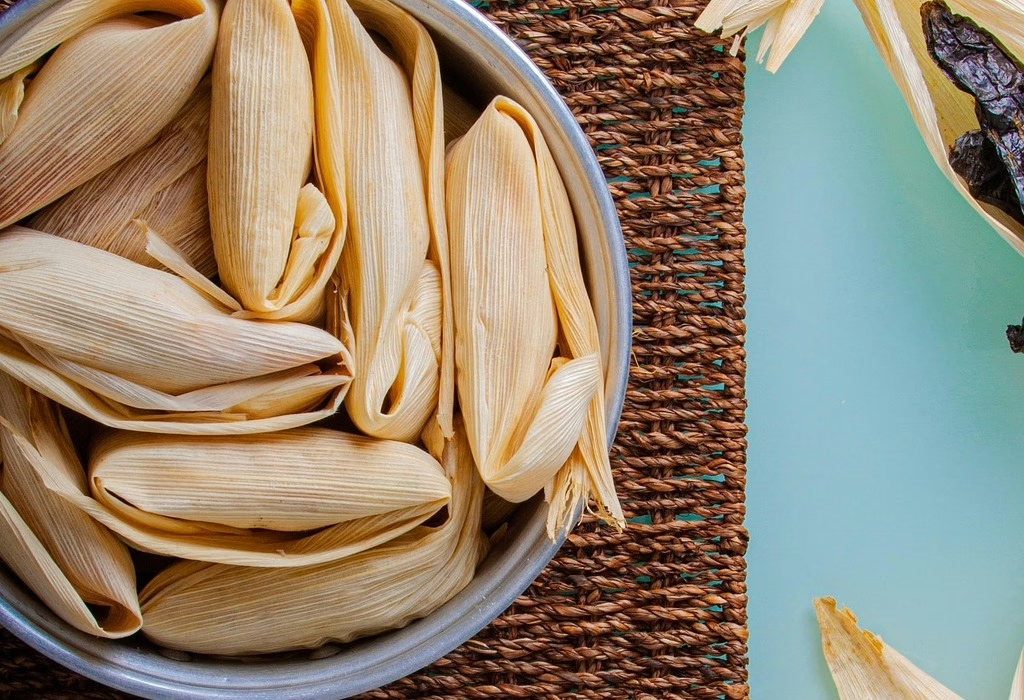
A tamal (while ‘tamale’ is common in English, the correct singular in Spanish is ‘tamal’) is a traditional Mexican dish with deep cultural roots that has been enjoyed since pre-Columbian times. It’s a creation of masa, a corn dough mixed with lard or shortening. Cooks spread this dough on a corn husk or leaf, fill it with tasty things like meat or veggies, then fold it up. They steam the tamal until it becomes firm and ready to eat.
Tamales are essential in Mexican culture since they reflect the importance of family and community. Different parts of Mexico have their ways of making tamales, with lots of tasty fillings and sauces, showing how diverse Mexican cooking can be.

Tamal History
Tamales have existed for thousands of years. They started in places like Mexico with ancient civilizations like the Aztecs, Maya, and Toltecs.
These ancient civilizations loved tamales because they were easy to carry around, lasted long, and provided nourishment. At first, tamales had different stuff, like beans, turkey, or veggies. People cooked them over a fire or steamed them, which made them easy to take along when people traveled or went to battle.
Now, the words “tamal” and “tamale” are mainly about the language you’re speaking. In Spanish, you say “tamal” for one; in English, it’s “tamale.” But they mean the same thing – a delicious treat made of corn dough with tasty ingredients inside, wrapped and cooked.
Tamales have changed over time, incorporating influences and flavors from different cultures like Spanish, African, Asian, and European. But they’re still a favorite in Mexico and Central America, keeping their unique place in the world of food. To taste authentic street tamales in their natural habitat, join our Street Food Tour Mexico City.

Different Regions in Mexico and their Tamales Traditions
Corundas
In Michoacán, the tamal takes a unique architectural form: the Corunda. Unlike the rectangular tamal, Corundas are triangular or spherical. They are often made without filling, focusing on the quality of the masa, and are traditionally served with crema, salty queso Cotija, and a zesty red salsa.
Corundas are very popular in Michoacán since they are a must-try in every celebration and festival of this beautiful state. People gather to enjoy these delicious treats, which are often served with beans, salsa, and sour cream on the side.
Creating this tamal-type dish is also a way to understand family cuisine’s traditional methods in Mexico. Every recipe passed through every generation is a marvelous way to understand the culinary heritage of Michoacán and the creativity of Mexican cooking. Check out our post about spicy food! 🌶️

Uchepos
While most tamales rely on nixtamalized corn dough, uchepos are a completely different story. Hailing from the heart of Michoacán and the Tierra Caliente region, these are made from fresh, young corn (elote tierno) harvested while the kernels are still milky and sweet. The result isn’t a firm dough, but a light, almost custard-like texture that melts in your mouth. Wrapped in fresh green corn husks rather than dried ones, uchepos capture the pure, bright essence of the harvest, offering a delicate sweetness that is hard to find in any other Mexican dish.
What makes the uchepo truly iconic is the play of contrasts. Even though the base is naturally sweet, it is traditionally served as a savory masterpiece. In a local Michoacán market, you’ll find them drenched in a vibrant, spicy salsa verde or a rich tomato-based sauce, topped with a thick dollop of crema de rancho and a generous sprinkle of salty, crumbly Cotija cheese. This balance of sweet corn, tangy cream, and slow-burning chili is a sensory experience that defines the soulful, home-cooked heritage of Michoacán’s culinary landscape.
Differences Between Mexican Tamales and Other Regional Varieties
Mexican tamales are usually made with corn dough and have delicious fillings like meat, cheese, or veggies. They’re wrapped in corn husks or leaves and steamed. They might feel a bit rougher compared to other kinds.
| Feature 👀 | Mexican Tamales 🍴 | Central American Tamales 🗺️ | South American (Humitas/Hallacas) 🌍 |
| Wrapper | Mostly corn husks (dried) | Mostly banana leaves (fresh) | Banana leaves or fresh corn husks |
| Masa Texture | Fluffy and aerated | Denser, often more hydrated | Creamy, sometimes sweet |
| Common Fillings | Mole, salsa verde, pork | Rice, olives, capers | Raisins, beef, hard-boiled eggs |
Tamales from other countries can be different because they might use other kinds of dough or fillings based on what’s popular in that area. For example, in Central America, they might be smaller and have fillings like rice or potatoes. At the same time, in South America, they might be sweeter and wrapped in different leaves, with stuff like raisins or coconut inside. Each country’s tamales have an exceptional taste, showing off their unique food traditions.

Importance of Tamales in Mexico
Tamales are crucial in Mexico because they’re not just food but part of the culture and history. Families often make tamales during special times like holidays or celebrations, bringing everyone together in the kitchen. It’s a way to pass down recipes and traditions from generation to generation, making tamales more than just a meal.
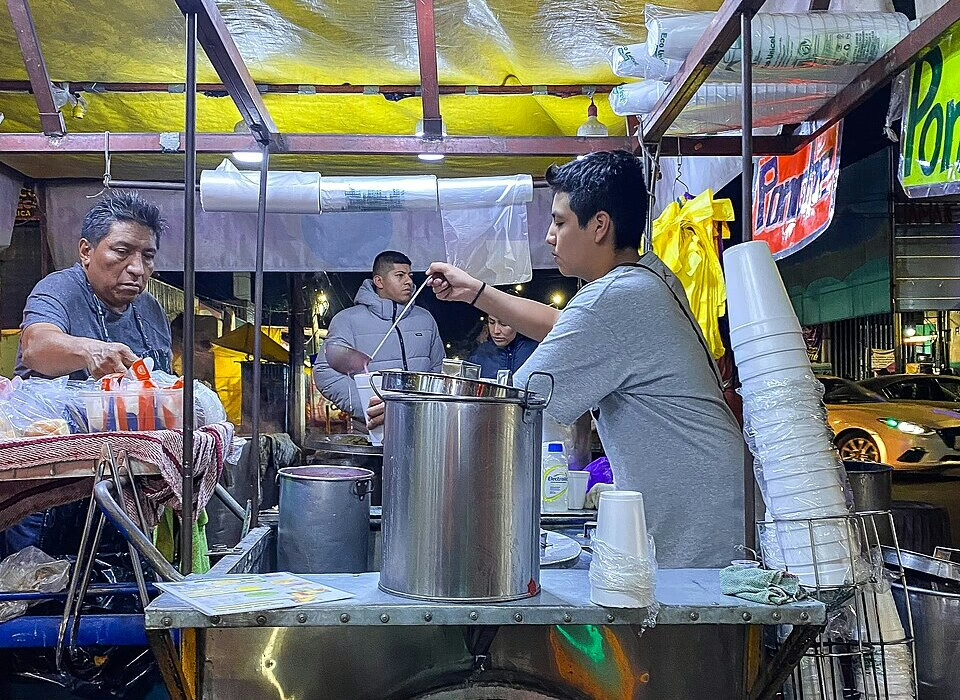
In Mexico, tamales are also a big deal for festivals, culture, traditions, and Mexican events. You’ll find them at markets and street stalls, with people lining up to get a taste. They’re a tasty treat that brings people joy and connects them to their roots, reminding them of the flavors and stories of their homeland.
🗒️Author’s Note: In Mexico, you’ll find tamal vendors almost everywhere, especially outside concerts or massive events. They are the ultimate late-night street food; when you leave a club or a show with a huge appetite, a warm tamal is the go-to remedy. These vendors usually carry a wide variety of flavors, making them a staple of Mexico’s vibrant nightlife and street food scene.
🎄Looking for celebrations and cultural events in Mexico? Check out our tours:
- Mexico Monarch Butterfly: Visit Sierra Chincua Sanctuary and a Magic Town (14h).
- Mixquic Dia de Muertos: Day of the Dead Tour (9 h).
- Day of the Dead Mexico City 2024: Walking Tour (4 h).

How to Prepare a Tamal?
Ingredients: To prepare tamales, you will need masa made with corn flour, water or broth, and a small amount of fat such as lard or vegetable shortening.
- Assembly: Start by spreading a thin layer of masa onto a corn husk or banana leaf. Then, add a spoonful of your chosen filling to the masa’s center.
- Wrapping: Fold the sides of the corn husk or banana leaf over the filling to encase it completely. It’s like wrapping a little gift!
- Cooking: Steam the wrapped tamales until they’re cooked through and firm. Depending on their size, this usually takes 1-2 hours.
- Enjoyment: Once cooked, unwrap the tamales and enjoy them hot! They’re perfect for sharing with family and friends. Pair them with your favorite sauces or salsas for extra flavor.
Types of tamales
There are different types of tamales, each with its unique twist. Tamal hoja de plátano (banana leaf). This one is made by wrapping the masa and filling it in a banana leaf, which gives it a distinct flavor and aroma. On the other hand, Tamal hoja de maíz (corn leaf tamal) uses corn husks for wrapping, resulting in a slightly different texture and taste.
For those following a vegan diet, there’s the vegan tamal, which omits animal products like lard or meat, instead using plant-based ingredients to create a delicious and cruelty-free version of this beloved dish. It doesn’t matter if you prefer the traditional flavors or the vegan tamal for a plant-based option. There’s a tamal for everyone to enjoy! 🍀Taste delicious veggie dishes with our: Mexico City Vegan Food Tour: a Delicious Journey in Roma and Condesa (3.5 h)

Conclusion
In the grand tapestry of Latin American gastronomy, Tamal stands out as a living relic of pre-Hispanic ingenuity. What began as a portable, high-energy meal for Aztec and Mayan warriors has evolved into a sophisticated symbol of national identity. To truly understand what is a tamal, one must look beyond the simple combination of masa and filling; it is a culinary vessel that has carried indigenous techniques, colonial influences, and family secrets across centuries, maintaining its relevance in the modern world.
The sheer diversity of this dish is a reflection of Mexico’s rich geography. From the fluffy, corn-husked classics found in the high-altitude streets of Mexico City to the banana-leaf-wrapped oaxaqueños and the delicate, creamy uchepos of Michoacán, the world of Tamal Mexican Food offers an endless journey for the curious palate. Each region uses the local bounty to tell its own story, proving that the art of tamale-making is not a static recipe, but a flexible, living heritage that adapts to every landscape and diet, including modern vegan and vegetarian interpretations.
Beyond its flavor,
The cultural weight of the tamal lies in the “Tamalada“—the traditional communal gathering where families spend hours assembling hundreds of tamales. This social ritual is where the true definition of what is a tamal is forged; it is a bond that connects generations, where elders pass down the rhythmic flick of the wrist needed to spread the masa perfectly. For the traveler, eating a tamal in a local market isn’t just a meal; it’s an invitation to participate in a sacred Mexican tradition that values patience, community, and the sanctity of corn.
Ultimately, exploring the nuances of Tamal Mexican Food is an essential pilgrimage for any food lover visiting Mexico. Whether you are unrolling a steaming husk at a street corner at dawn or enjoying a gourmet version in a fine-dining establishment, you are tasting the soul of a nation. We hope this guide has inspired you to seek out these authentic flavors and discover for yourself why the tamal remains the undisputed king of Mexican comfort food. The next time someone asks you what is a tamal, you’ll be able to tell them it’s a small, wrapped gift from Mexico’s history to the world.